 OffGridStead
Aquaponics & Greenhouse Guide: Design, Build, and Grow Year-Round
Part 1: Aquaponics Fundamentals
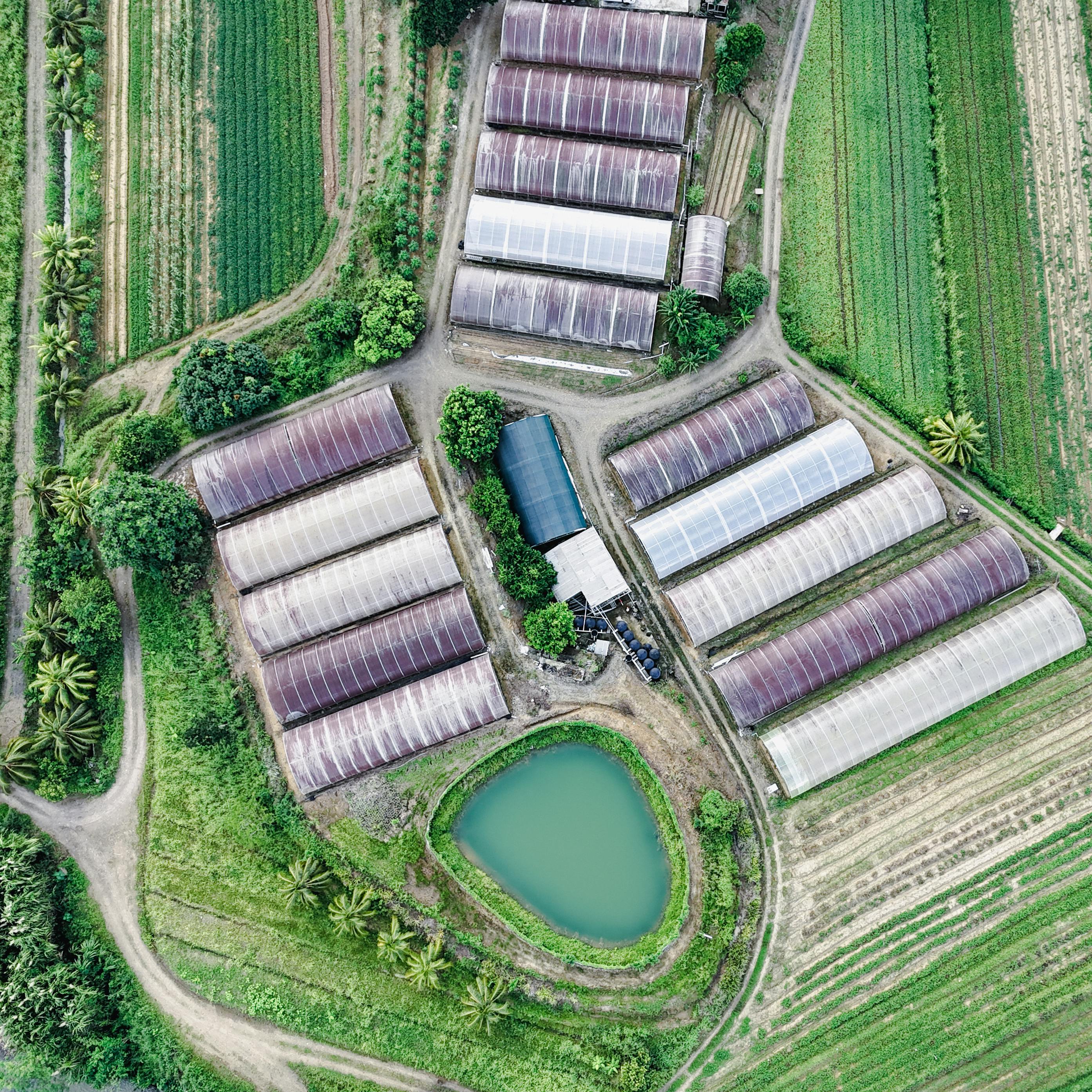
Aquaponics combines recirculating aquaculture (fish farming) with hydroponics (soilless plant growing) into a single closed-loop system. Fish produce waste. Bacteria convert that waste into plant-available nutrients. Plants absorb those nutrients and filter the water, which returns clean to the fish tank. No synthetic fertilizer. No water discharge. No soil-borne disease. The system consumes roughly 10% of the water a conventional garden uses because the only water lost is through plant transpiration and evaporation — everything else recirculates.
For an off-grid homestead, this matters. You are producing animal protein and vegetables from the same water input, in the same footprint, with no dependence on municipal supply, chemical fertilizer, or soil quality. A well-designed aquaponics system inside a greenhouse can produce food 12 months a year, regardless of your climate zone.
The Nitrogen Cycle: How Fish Waste Becomes Plant Food
The biology driving aquaponics is the nitrification cycle, and understanding it is non-negotiable for keeping fish alive and plants healthy.
- Fish excrete ammonia (NH3/NH4+) through their gills and in their waste. Ammonia is toxic to fish at concentrations above 1 ppm.
- Nitrosomonas bacteria colonize your grow media and biofilter surfaces, converting ammonia to nitrite (NO2-). Nitrite is also toxic to fish above 1 ppm.
- Nitrobacter bacteria convert nitrite to nitrate (NO3-). Nitrate is relatively non-toxic to fish (safe up to 150-200 ppm in most species) and is the primary nitrogen source plants absorb through their roots.
- Plants uptake nitrate along with other dissolved nutrients (phosphorus, potassium, calcium, iron, and trace minerals from fish feed), effectively filtering the water before it returns to the fish tank.
This cycle takes 4-6 weeks to establish in a new system — a process called “cycling.” During this period, ammonia and nitrite will spike before bacterial colonies mature enough to process them in real time. You must monitor water chemistry daily during cycling and should not stock fish at full density until both ammonia and nitrite read zero consistently.
⚠️ Cycling Is Not Optional
Adding fish to an uncycled system is the number one cause of fish death in new aquaponics setups. Use fishless cycling (dosing pure ammonia to 2-4 ppm daily) for 4-6 weeks before introducing fish, or start with a small number of hardy fish (3-4 per 100 gallons) and increase stocking density gradually over 8 weeks as bacteria populations establish.
System Types
There are three primary aquaponics configurations, each with distinct advantages. Most off-grid builders end up running a hybrid.
| System Type | How It Works | Best For | Grow Media | Complexity | Cost (per 32 sq ft bed) |
|---|---|---|---|---|---|
| Media Bed (Flood & Drain) | Water floods a gravel/clay-pebble bed on a timed cycle, then drains back to the sump or fish tank. Media hosts nitrifying bacteria and supports root structures. | Root vegetables, heavy fruiting crops, beginners | Expanded clay (LECA), lava rock, river gravel | Low | $150-300 |
| NFT (Nutrient Film Technique) | A thin film of water flows continuously through enclosed channels. Plant roots sit in the stream. | Leafy greens, herbs, small plants | None (net pots with starter plugs) | Medium | $100-200 |
| DWC (Deep Water Culture) | Plants float on rafts in 8-12 inch deep troughs of aerated, nutrient-rich water. | Lettuce, basil, commercial-scale leafy production | None (net pots with starter plugs) | Medium | $80-150 |
| Hybrid | Combines media beds (for filtration and heavy crops) with NFT or DWC channels (for high-volume leafy production). | Diversified year-round production | Mixed | Medium-High | $250-400 |
Media bed systems are the most forgiving and the best starting point for homesteaders. The gravel or clay pebble media acts as a mechanical filter, biofilter, and growing substrate all in one. NFT and DWC systems produce more leafy greens per square foot but require a separate biofilter and solids removal — adding components and potential failure points.
Fish Species for Off-Grid Aquaponics
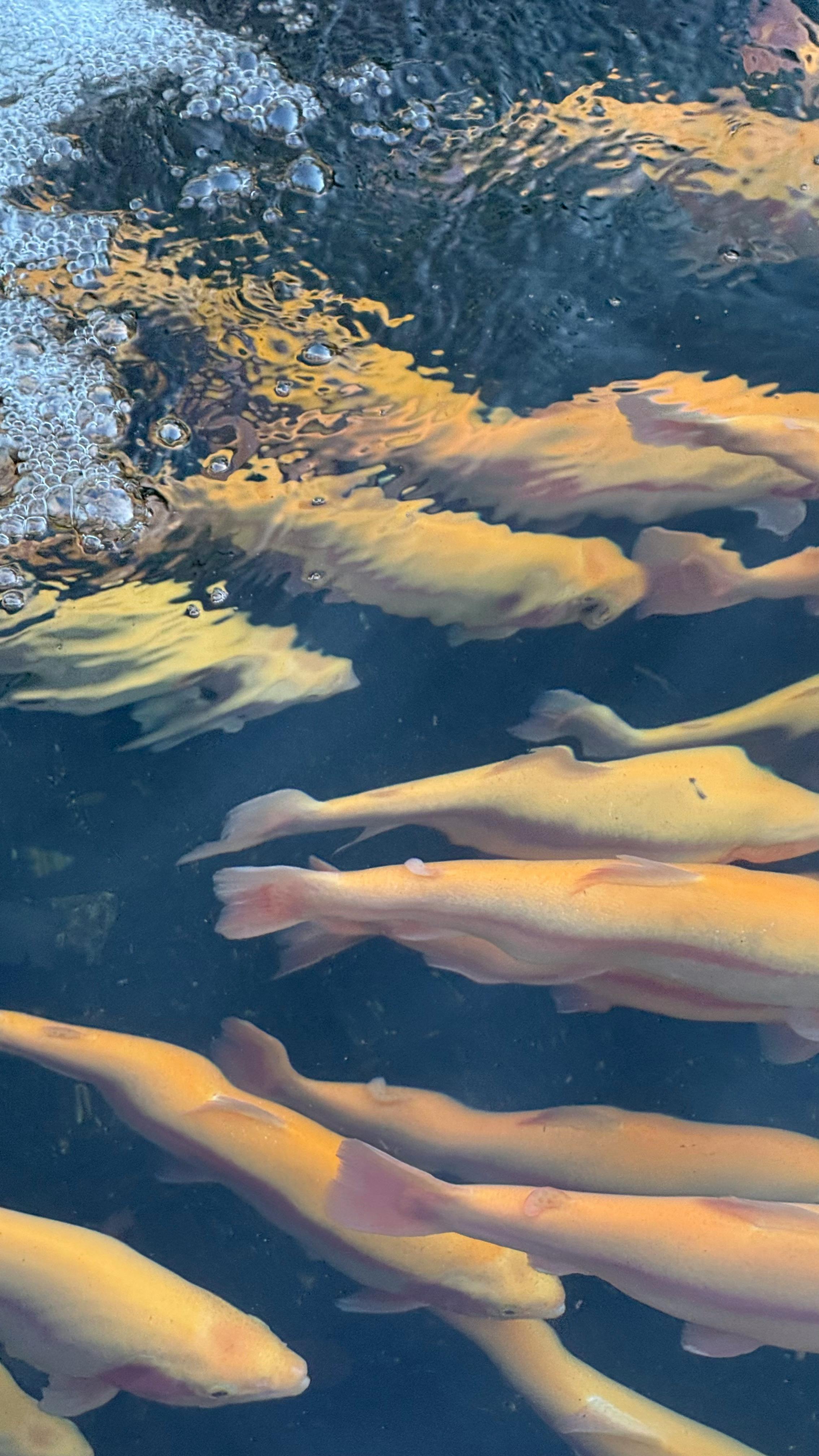
Your fish choice depends on your climate, whether you want to eat them, and how much temperature control you can maintain. Below is an honest comparison.
| Species | Temp Range (F) | Optimal Temp (F) | Growth to Harvest | Edibility | Feed Conversion | Difficulty | Notes |
|---|---|---|---|---|---|---|---|
| Tilapia | 65-90 | 78-86 | 6-9 months (to 1.5 lb) | Excellent | 1.5:1 | Easy | The standard aquaponics fish. Fast-growing, hardy, tolerant of crowding and poor water quality. Requires heated water in most US climates. Illegal to keep in some states — check regulations. |
| Bluegill / Sunfish | 50-85 | 68-78 | 12-16 months (to 0.5-1 lb) | Good | 2.0:1 | Easy | Native to most of the US, legal everywhere. Slower growing than tilapia but tolerates cooler water. |
| Channel Catfish | 55-90 | 75-85 | 12-18 months (to 1-2 lb) | Excellent | 1.8:1 | Easy | Hardy bottom feeder. Tolerates low oxygen and variable water quality. Good choice for warm-climate homesteads that want eating-size fish. |
| Rainbow Trout | 45-65 | 52-62 | 12-16 months (to 1-2 lb) | Excellent | 1.5:1 | Hard | Cold-water species. Dies above 70F. Requires high dissolved oxygen (>7 ppm). Outstanding flavor but demands a cool, well-aerated greenhouse — realistic only in northern climates or with active cooling. |
| Goldfish / Koi | 40-85 | 65-75 | N/A (ornamental) | Not eaten | N/A | Very Easy | Cheap, hardy, widely available. Good for cycling a new system and for growers who want nutrients without the commitment of food fish. |
| Hybrid Striped Bass | 55-85 | 70-80 | 15-20 months (to 1.5-2 lb) | Excellent | 1.7:1 | Medium | Tolerates a wider temperature range than trout and tastes better than tilapia, but more sensitive to water quality swings. |
💡 Pro Tip
For a first system, start with tilapia if your greenhouse stays above 65F, or bluegill if temperatures fluctuate into the 50s. Both species are forgiving of beginner mistakes in pH, ammonia, and feeding. Graduate to trout or bass once you have a season of water chemistry data and confidence in your temperature control.
System Sizing: The Ratios That Matter
Aquaponics sizing is governed by a few core ratios. Get these right and the biology takes care of itself.
Tank sizing example: If you plan to raise 30 tilapia to harvest weight (1.5 lb each = 45 lb total), you need a minimum of 225-450 gallons of fish tank. A 300-gallon tank is a practical starting point — IBC totes (275 gal) work, as do stock tanks (100-300 gal) or purpose-built round poly tanks.
Grow bed sizing: At a 1:1 ratio with a 300-gallon fish tank, you need 300 gallons of grow bed volume. A standard 4x8-foot media bed filled 12 inches deep holds roughly 200 gallons of media-plus-water. Two of those beds (64 sq ft of grow space) balances a 300-gallon tank well.
Pump sizing: The pump must turn over the entire system volume 2-4 times per hour. For a 500-gallon total system (300 gal tank + 200 gal in beds and plumbing), you need a pump rated at 1,000-2,000 GPH at your operating head height. A 400-800 GPH pump typically covers this after accounting for head loss through piping and elevation.
Part 2: Building a Proper Greenhouse
Aquaponics without a greenhouse is seasonal aquaponics — three to five months of production in most of the US, followed by system shutdown, fish death risk from freezing, and lost momentum. A greenhouse extends your growing season to 12 months, stabilizes water temperature (the fish tank itself acts as thermal mass), and protects plants from wind, hail, and pests.
Greenhouse Types for Aquaponics
| Type | Cost (12x24 ft) | Wind Resistance | Snow Load | Light Transmission | Lifespan | DIY Difficulty |
|---|---|---|---|---|---|---|
| Hoop House (Quonset) | $800-2,000 | Moderate | Low-Moderate | 85-90% (single-layer poly) | 3-5 yr (film), 15-20 yr (frame) | Easy |
| A-Frame / Gable | $2,000-5,000 | Good | Good | 80-90% | 20-30 yr | Medium |
| Lean-To (attached) | $1,000-3,000 | Good (sheltered) | Moderate | 70-85% (one opaque wall) | 20-30 yr | Easy-Medium |
| Geodesic Dome | $3,000-8,000 | Excellent | Excellent | 80-85% | 20-30 yr | Hard |
For most off-grid aquaponics builds, the hoop house offers the best cost-to-performance ratio. A 12x24-foot hoop house (288 sq ft) provides enough space for a 300-gallon fish tank, two 4x8 media beds, a DWC channel, a workbench, and walking paths — and can be built by two people in a weekend with basic tools.
A lean-to greenhouse attached to the south wall of your cabin or shop is the best option if passive heating is a priority. The shared wall reduces heat loss, and you can vent warm greenhouse air into the building (or vice versa) through a simple window.
Sizing for Aquaponics
The minimum practical greenhouse size for aquaponics is 200 square feet (e.g., 10x20). Below that, you cannot fit a fish tank, grow beds, and adequate walking space. For a system that meaningfully contributes to household food production, target 250-350 square feet.
Layout allocation for a 12x24-foot hoop house:
- Fish tank and sump: 30-40 sq ft
- Grow beds (media): 64 sq ft (two 4x8 beds)
- DWC or NFT channel: 24-32 sq ft
- Seedling/staging area: 16 sq ft
- Walkways and working space: 100-120 sq ft
Covering Materials
| Material | R-Value | Light Transmission | Lifespan | Cost (per sq ft) | Best For |
|---|---|---|---|---|---|
| 6-mil greenhouse poly film (single layer) | 0.83 | 85-90% | 3-4 years | $0.05-0.10 | Budget hoop houses, mild climates |
| 6-mil greenhouse poly film (double inflated) | 1.5-1.7 | 78-84% | 3-4 years | $0.10-0.15 | Cold-climate hoop houses (best value for insulation) |
| Polycarbonate twin-wall (6mm) | 1.54 | 80-83% | 15-20 years | $1.50-2.50 | Permanent structures, cold climates |
| Polycarbonate twin-wall (8mm) | 1.60 | 78-80% | 15-20 years | $2.00-3.00 | Heavy snow areas, north wall panels |
| Polycarbonate triple-wall (16mm) | 2.50 | 70-75% | 15-20 years | $3.50-5.00 | Extreme cold, north-facing walls only |
| Tempered glass (single pane) | 0.90 | 88-92% | 30+ years | $5.00-10.00 | Southern exposures where maximum light is critical |
| Double-pane insulated glass | 2.00 | 78-82% | 30+ years | $10.00-20.00 | Permanent structures with budget to match |
For a cost-effective off-grid aquaponics greenhouse, double-inflated poly film on the roof and end walls with 6mm polycarbonate twin-wall on the north wall provides a good balance of insulation and light. Replace the poly every 3-4 years (budget $50-100 per replacement for a 12x24 hoop house).
ℹ️ Double Inflation
A double-inflated poly cover uses two layers of greenhouse film separated by a 2-4 inch air gap, kept inflated by a small squirrel-cage blower (15-25 watts, running 24/7). The trapped air nearly doubles the R-value of the covering and dramatically reduces condensation drip. The blower draws less than 0.5 kWh per day — a worthwhile trade for the insulation gain in any climate with winter lows below 25F.
Foundation Options
Off-grid builds rarely justify a poured concrete foundation for a greenhouse. Three alternatives work well:
-
Compacted gravel pad (4-6 inches): Lowest cost ($100-200 for a 12x24 area). Provides drainage, prevents mud, and anchors ground posts driven through gravel into native soil. Cover with landscape fabric before spreading gravel to suppress weeds.
-
Treated timber perimeter frame (4x6 or 6x6): Defines the greenhouse footprint, anchors base rails, and raises the covering above ground-level splash. Pin to the ground with 24-inch rebar stakes. Cost: $150-300.
-
Concrete piers (sono tubes): Best for permanent structures on sloped ground. Pour 8-12 inch sono tubes to below frost line at each post location. Cost: $200-500 depending on the number of piers and frost depth.
Passive Solar Design
Orientation and thermal mass are free heating — the most cost-effective climate control available.
Orientation: Align the greenhouse with its long axis running east-west. The south-facing long wall captures maximum winter sunlight when the sun is low. The north wall, which receives the least direct sun, should be insulated or backed by a building.
Thermal mass: Water is the best thermal storage medium available at reasonable cost. It absorbs heat during the day and releases it at night. Your fish tank already provides significant thermal mass — 300 gallons of water weighs 2,500 pounds and stores substantial energy. Supplement with:
- 55-gallon water barrels painted flat black, placed along the north wall. Each barrel stores roughly 7,500 BTU per 10F temperature swing. Four barrels along a 24-foot wall store 30,000 BTU — enough to offset 4-6 hours of nighttime heat loss in a well-insulated hoop house.
- Stone or concrete block along the north wall base retains heat and radiates it at floor level.
North wall insulation: If not using a lean-to design, insulate the north wall with rigid foam board (R-10 minimum) behind a reflective surface (Mylar, white paint, or aluminum-faced insulation). This reflects light back onto the grow beds and reduces heat loss through the wall that contributes least to solar gain.
Ventilation
A greenhouse without adequate ventilation will overheat on a sunny 40F day — air temperatures can spike to 110F+ inside within an hour. Ventilation also controls humidity, which in an aquaponics greenhouse runs high (60-80%) and promotes fungal disease if stagnant.
- Ridge vent: A continuous opening along the peak allows hot air to escape by convection. Operable ridge vents (manual or motorized) are standard on gable and A-frame greenhouses. On hoop houses, cut a slot along the ridge and cover with hinged polycarbonate panels.
- Roll-up sidewalls: The simplest and most effective ventilation for hoop houses. Hand-crank or motorized roll-up mechanisms raise the poly film from ground level, creating full-length openings on both sides. Cost: $80-150 per side for a manual crank system.
- Exhaust fans: Thermostatically controlled exhaust fans (sized at 1 CFM per square foot of floor space minimum) provide forced ventilation when passive methods are insufficient. For a 288 sq ft greenhouse, a single 12-inch fan rated at 800-1,000 CFM is adequate.
- HAF (Horizontal Air Flow) fans: Small circulation fans (8-12 inch) mounted overhead to move air horizontally through the greenhouse, eliminating dead spots and temperature stratification. Two to four HAF fans is standard for a 12x24 structure. Cost: $25-50 each.
Heating Strategies for Off-Grid
When passive solar and thermal mass are not enough — and in northern climates, they will not be from December through February — you need active heating.
| Method | Heat Output | Fuel/Energy Source | Cost to Build/Install | Operating Cost (per winter) | Complexity |
|---|---|---|---|---|---|
| Rocket mass heater | 20,000-40,000 BTU/hr | Scrap wood, small-diameter wood | $200-500 (DIY) | Near zero (scrap wood) | High (masonry skills, fire safety) |
| Compost heat exchange | 5,000-15,000 BTU/hr (sustained) | Green compost materials + water tubing | $100-300 | Near zero | Medium (requires regular compost management) |
| Propane unit heater | 25,000-75,000 BTU/hr | Propane | $200-400 | $300-800 (depending on climate) | Low |
| Fish tank as thermal mass | Passive (buffer, not source) | N/A | N/A | N/A | N/A |
| Ground-to-air heat exchange (GAHE) | Variable (moderating, not primary) | Electricity for fan | $500-1,500 | $20-50 | Medium-High |
💡 Pro Tip
A rocket mass heater with a thermal bench running along the north wall of your greenhouse is the best off-grid heating solution if you have access to wood. The thermal mass of the bench (cob over the exhaust ducting) continues radiating heat for 12-18 hours after the fire dies. Combined with the fish tank thermal mass and double-inflated poly, this setup can keep a 12x24 greenhouse above 50F through nights that drop to 10F outside.
Cooling
Overheating kills fish faster than cold does. Tilapia begin to stress above 90F and die above 95F. Your cooling plan is as important as your heating plan.
- Shade cloth (30-50%): Deploy over the roof in summer to reduce solar gain. Knitted HDPE shade cloth is inexpensive ($0.10-0.30/sq ft) and lasts 8-10 years. Use 30% for most crops, 50% in the deep South or desert climates.
- Evaporative cooling: A wet-wall or fan-and-pad system can drop interior temperatures 10-20F below ambient. Effective in dry climates (below 40% RH), less so in the humid Southeast.
- Ground-to-air heat exchange (GAHE): Buried 4-inch corrugated drain pipe (100-200 linear feet, 4-6 feet deep) with a fan pulling greenhouse air through the underground tubes and returning it. Earth temperature at that depth is a constant 50-55F year-round. This moderates both summer highs and winter lows.
Part 3: What to Plant and How
Aquaponics systems excel at growing fast-turnover, nutrient-hungry crops. Leafy greens and herbs are the easiest and most productive. Fruiting crops are possible but demand more nutrients and light. Root vegetables work only in media beds, and with caveats.
Best Crops by Category
Leafy Greens (highest success rate, fastest return): Lettuce (all types), spinach, Swiss chard, kale, bok choy, arugula, mustard greens, watercress.
Herbs (high value per square foot): Basil, cilantro, parsley, mint, chives, dill, oregano.
Fruiting Crops (require mature systems with high nutrient load): Tomatoes, cucumbers, peppers, squash, strawberries, beans, peas.
Root Vegetables (media beds only): Radishes, green onions, carrots (short varieties), beets. Avoid large root crops — they displace too much media and can disrupt water flow.
Detailed Planting Table
| Crop | Germination (days) | Days to Harvest | Optimal Water Temp (F) | pH Preference | Yield per sq ft | System Type | Difficulty |
|---|---|---|---|---|---|---|---|
| Lettuce (leaf) | 3-7 | 30-45 | 60-70 | 6.0-7.0 | 3-5 heads | DWC, NFT, Media | Easy |
| Lettuce (head) | 3-7 | 50-70 | 60-70 | 6.0-7.0 | 2-3 heads | DWC, Media | Easy |
| Spinach | 5-10 | 35-45 | 55-65 | 6.0-7.0 | 0.5-1.0 lb | DWC, NFT, Media | Easy |
| Swiss Chard | 5-10 | 50-60 | 60-75 | 6.0-7.5 | 1.0-2.0 lb | Media, DWC | Easy |
| Kale | 5-10 | 55-70 | 55-70 | 6.0-7.5 | 1.0-2.0 lb | Media, DWC | Easy |
| Bok Choy | 3-7 | 30-45 | 55-70 | 6.0-7.5 | 2-4 heads | DWC, NFT, Media | Easy |
| Arugula | 3-5 | 25-35 | 55-65 | 6.0-7.0 | 0.5-1.0 lb | NFT, DWC, Media | Easy |
| Basil | 5-10 | 28-40 | 70-80 | 6.0-7.0 | 0.5-1.5 lb | NFT, DWC, Media | Easy |
| Cilantro | 7-14 | 35-50 | 55-68 | 6.0-7.0 | 0.3-0.5 lb | NFT, DWC, Media | Medium |
| Parsley | 14-21 | 60-80 | 60-70 | 6.0-7.0 | 0.5-1.0 lb | Media, DWC | Easy |
| Mint | 10-15 | 40-60 | 65-75 | 6.0-7.5 | 0.5-1.0 lb | Media (contained) | Easy |
| Chives | 10-14 | 60-90 | 60-70 | 6.0-7.0 | 0.3-0.5 lb | Media, DWC | Easy |
| Tomatoes (cherry) | 5-10 | 60-80 | 70-80 | 6.0-6.5 | 3-8 lb | Media | Medium |
| Tomatoes (slicing) | 5-10 | 70-90 | 70-80 | 6.0-6.5 | 5-15 lb | Media | Medium |
| Cucumbers | 3-7 | 50-70 | 70-80 | 6.0-7.0 | 5-10 lb | Media | Medium |
| Peppers (sweet) | 7-14 | 70-90 | 70-80 | 6.0-6.5 | 2-5 lb | Media | Medium |
| Peppers (hot) | 7-14 | 80-100 | 70-85 | 6.0-6.5 | 1-3 lb | Media | Medium |
| Strawberries | N/A (transplant) | 60-90 (from transplant) | 65-75 | 5.5-6.5 | 0.5-1.5 lb | Media, NFT towers | Medium |
| Green Beans (bush) | 5-8 | 50-65 | 70-80 | 6.0-7.0 | 1-3 lb | Media | Easy |
| Radishes | 3-5 | 25-35 | 55-65 | 6.0-7.0 | 8-12 radishes | Media only | Easy |
| Green Onions | 5-10 | 30-50 | 60-70 | 6.0-7.0 | 8-16 stalks | Media only | Easy |
| Watercress | 5-10 | 30-40 | 55-65 | 6.5-7.5 | 0.5-1.0 lb | DWC, NFT | Easy |
ℹ️ pH Compromise
Fish prefer pH 7.0-8.0. Most plants prefer 5.5-6.5. Nitrifying bacteria perform best at 7.0-8.0. The working compromise is 6.8-7.2. At this range, fish are comfortable, bacteria function well, and most nutrients remain plant-available. Leafy greens tolerate this range without issue. Fruiting crops that prefer lower pH (tomatoes, strawberries, peppers) may show minor iron or manganese deficiency — supplement with chelated iron if you see yellowing between leaf veins.
Companion Planting in Aquaponics
Traditional companion planting rules (based on root interactions and soil chemistry) do not directly apply in soilless systems, but spatial and pest-management relationships still matter.
Good pairings:
- Basil with tomatoes — basil repels whitefly and aphids that target tomato foliage.
- Lettuce under tomato or cucumber canopy — lettuce tolerates and benefits from partial shade in summer.
- Chives near any fruiting crop — the allium scent deters aphids.
- Beans with any leafy green — beans are light feeders that do not compete for nutrients.
Pairings to avoid:
- Mint near anything in a shared media bed — mint spreads aggressively and will crowd out neighbors. Grow it in a separate container or isolated NFT channel.
- Dill near tomatoes — dill can inhibit tomato growth at close proximity.
- Fennel near most crops — fennel exudes compounds that suppress growth in neighboring plants.
Starting from Seed vs. Transplants
Start seeds in a separate tray with an inert medium (rockwool cubes, peat plugs, or coconut coir) using clean water — not system water. System water contains elevated nutrients that can burn tender seedlings. Transplant into the aquaponics system once seedlings have 2-3 true leaves and a developed root mass (typically 2-4 weeks after germination).
For fruiting crops (tomatoes, peppers, cucumbers), purchasing nursery transplants saves 4-6 weeks compared to starting from seed and avoids the challenge of maintaining warm germination temperatures for heat-loving species.
Pest Management Without Chemicals
Chemical pesticides, herbicides, and fungicides will kill your fish. Even “organic” pesticides like pyrethrin are highly toxic to fish. Your pest management toolbox is limited to physically safe methods:
- Beneficial insects: Ladybugs (for aphids), lacewings (for aphids, whitefly, mealybugs), parasitic wasps (for whitefly, caterpillars). Release inside the greenhouse and maintain flowering plants (basil, dill) to keep beneficial populations established.
- Neem oil (cold-pressed): Safe for fish at recommended dilution rates when applied as a foliar spray that does not drip into system water. Spray in the evening and target the undersides of leaves. Effective against aphids, spider mites, and whitefly.
- Physical barriers: Insect netting over greenhouse vents (50-mesh or finer) prevents most flying pests from entering. Yellow sticky traps monitor and reduce whitefly and fungus gnat populations.
- Manual removal: Inspect plants daily. Pick off caterpillars, slugs, and large insects by hand. A strong water spray from a clean spray bottle dislodges aphid colonies.
- Environmental control: Keep humidity below 80% through ventilation to prevent powdery mildew and botrytis. Remove dead or diseased plant material immediately.
Seasonal Rotation Strategy
Even in a climate-controlled greenhouse, seasonal adjustments optimize production:
Cool season (Oct-Mar, water temp 55-68F): Focus on lettuce, spinach, kale, chard, bok choy, arugula, radishes, green onions, cilantro, parsley. These crops thrive at cooler water temperatures and tolerate lower light levels.
Warm season (Apr-Sep, water temp 70-82F): Shift to tomatoes, cucumbers, peppers, basil, beans, and strawberries. These crops require higher temperatures and longer day lengths to produce fruit.
Year-round: Lettuce, herbs (basil in summer, parsley and chives year-round), Swiss chard, and watercress can be grown continuously with succession planting every 2-3 weeks.
Part 4: Putting It All Together — Complete System Design
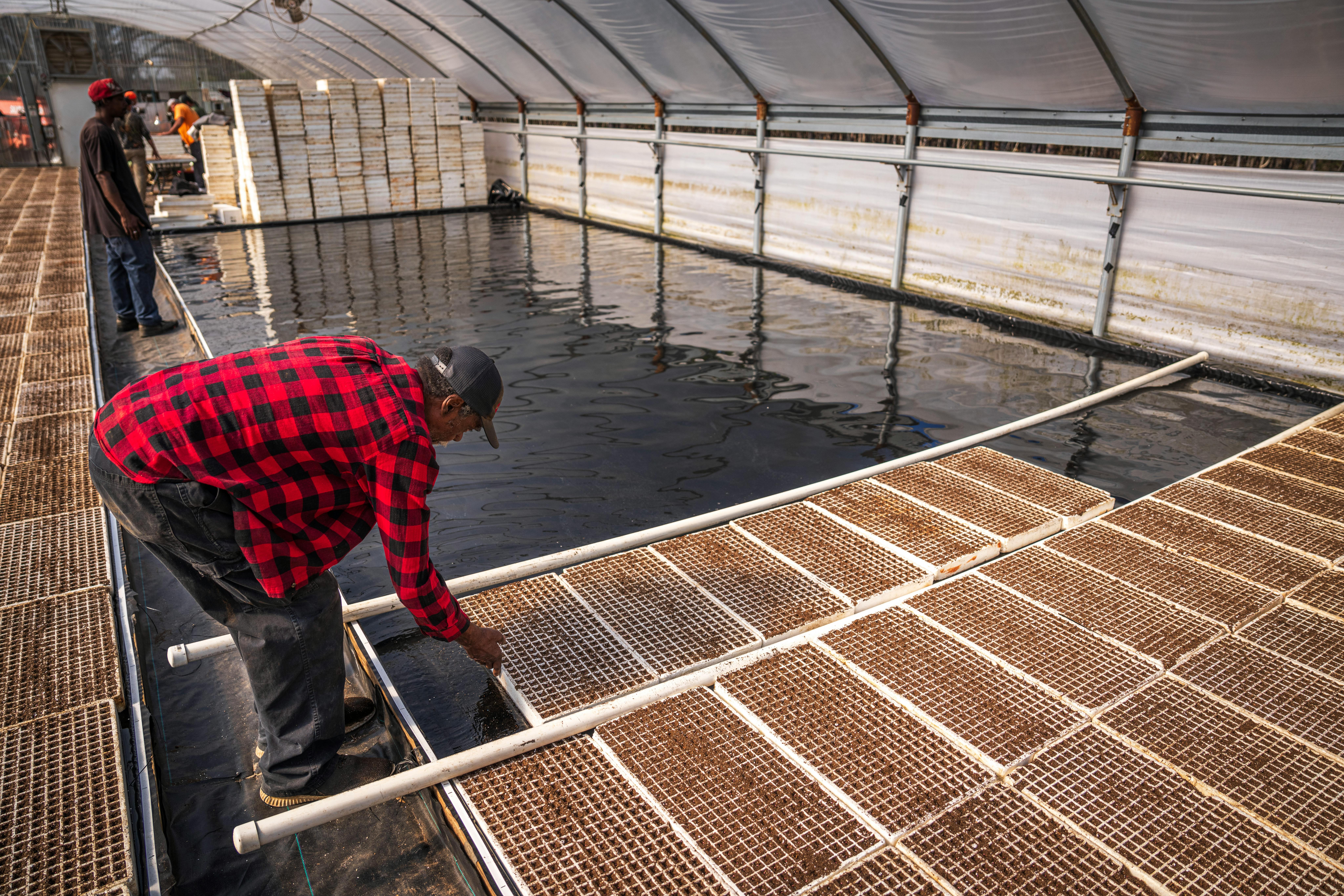
Below is a fully spec’d, buildable system for an off-grid homestead: a 12x24-foot hoop house with a 300-gallon tilapia system, media beds, and a small DWC channel. This is sized to meaningfully supplement a household’s vegetable intake year-round and produce 40-60 lb of fish annually.
Bill of Materials (2026 Prices)
| Component | Specification | Cost |
|---|---|---|
| Greenhouse Structure | ||
| Hoop house frame kit (12x24) | 1-3/8” galvanized steel bows, purlins, base rails | $600 |
| Greenhouse poly film (6-mil, double layer) | IR/anti-condensate treated, 2 rolls | $120 |
| Inflation blower | Small squirrel-cage, 50 CFM | $45 |
| Roll-up side vents (manual crank, 2 sides) | 24-ft length each | $180 |
| End wall framing + poly/polycarbonate | Lumber, hardware, 6mm twinwall for door end | $250 |
| Exhaust fan (12”, thermostat-controlled) | 800 CFM with louver | $120 |
| HAF circulation fans (2x) | 12-inch, 1/15 HP | $70 |
| Shade cloth (30%, roof coverage) | Knitted HDPE, 14x26 ft | $60 |
| Foundation (gravel pad, landscape fabric) | 3 yards crushed gravel, 300 sq ft fabric | $150 |
| Aquaponics System | ||
| Fish tank (300-gallon round poly) | Rubbermaid stock tank or equivalent | $200 |
| Grow beds, 2x (4x8 ft, 12” deep) | Lumber frame + EPDM pond liner | $280 |
| DWC trough (2x8 ft, 10” deep) | Lumber frame + EPDM liner + foam rafts | $90 |
| Expanded clay pebbles (LECA) | 200 liters (fills both media beds) | $160 |
| Sump tank (50-gallon) | Rubbermaid utility tub | $40 |
| Water pump | 800 GPH submersible (60W) | $65 |
| Air pump + air stones | Commercial-grade, 30W, 4 outlets | $55 |
| Bell siphons (2x, DIY) | PVC pipe and fittings | $25 |
| Plumbing (PVC pipe, fittings, valves, tubing) | 1”, 3/4”, various fittings | $120 |
| Water heater (aquarium, 300W) | Titanium submersible, thermostat | $50 |
| Monitoring & Supplies | ||
| Water test kit (API Master Freshwater) | Ammonia, nitrite, nitrate, pH | $35 |
| Thermometer (digital, dual probe) | Water temp + air temp | $15 |
| Fish (tilapia fingerlings, 30 ct) | From licensed hatchery | $45 |
| Fish feed (6-month supply) | 35% protein floating pellet, 25 lb bag | $40 |
| Seedling starter supplies | Trays, rockwool cubes, net pots | $40 |
| Chelated iron supplement | 1 lb (year supply) | $15 |
| Thermal mass (4x 55-gal black barrels, filled) | Used food-grade barrels | $80 |
| Totals | ||
| Greenhouse structure | $1,595 | |
| Aquaponics system | $1,085 | |
| Monitoring and supplies | $270 | |
| Grand Total | $2,950 |
Monthly Operating Costs
| Item | Monthly Cost |
|---|---|
| Fish feed (2-3 lb/month at full stock) | $5-8 |
| Electricity — water pump (60W, 24/7) | ~$6 (solar: $0) |
| Electricity — air pump (30W, 24/7) | ~$3 (solar: $0) |
| Electricity — fans and blower (~80W avg) | ~$5 (solar: $0) |
| Electricity — water heater (winter, ~150W avg) | ~$10 (solar: $0) |
| Seeds and starter plugs | $5-10 |
| Replacement poly film (amortized) | $3 |
| Water test reagents (amortized) | $3 |
| Total (grid power) | $40-48 |
| Total (solar-powered) | $16-24 |
On solar, the system draws roughly 320W average (pump + air pump + fans + blower), or about 7.7 kWh per day. In winter, add the water heater for a peak of roughly 10 kWh/day — within reach of a 2 kW array with a properly sized battery bank, as detailed in our solar sizing guide.
Expected Yield
Fish: 30 tilapia raised from fingerling to 1.5 lb in 8-9 months produces 40-45 lb of whole fish per cycle. Running two staggered cycles per year (possible in a heated greenhouse) yields 80-90 lb of tilapia annually. Dressed weight is approximately 33% of live weight, giving you 26-30 lb of fish fillets per year.
Vegetables: The 80 sq ft of grow space, running year-round with succession planting, produces approximately:
| Crop Category | Annual Yield Estimate |
|---|---|
| Leafy greens (lettuce, spinach, kale, chard) | 150-250 heads / 40-80 lb |
| Herbs (basil, cilantro, parsley, chives) | 15-30 lb |
| Tomatoes (summer, ~16 sq ft of media bed) | 30-60 lb |
| Cucumbers (summer, ~8 sq ft) | 20-40 lb |
| Peppers (summer, ~8 sq ft) | 10-20 lb |
| Radishes, green onions (cool season) | 10-15 lb |
| Total vegetable production | 125-245 lb/year |
These are realistic numbers for a well-managed system, not theoretical maximums. Commercial aquaponics operations achieve higher yields per square foot through optimized lighting, CO2 supplementation, and professional-grade environmental controls. A homestead system run by one person part-time should expect yields at the lower end of these ranges during the first year, improving as system biology matures and the operator gains experience.
Annual Value Estimate
At 2026 grocery prices — leafy greens at $3-5/lb, herbs at $15-25/lb, tomatoes at $3-4/lb, tilapia fillets at $6-8/lb — this system's annual production replaces $1,500-2,800 in grocery spending. Against an operating cost of $200-575/year depending on energy source, the system pays for its $2,950 construction cost within 1-3 years. That is before accounting for the food security value of year-round production completely independent of supply chains and grocery store availability.
Recommended Gear for Your Aquaponics Build
The right equipment makes the difference between a system that runs reliably and one that demands constant intervention. Here are our top picks for the core components.
Bluetti EB3A Power Station
268Wh LiFePO4 portable power station — run your air pump, water pump, and monitoring gear off-grid with fast solar recharging.
$249
View on AmazonAffiliate link
Leatherman Wave+
18-tool multitool for cutting tubing, tightening hose clamps, adjusting fittings, and handling the hundred small tasks that come with building and maintaining an aquaponics system.
$100
View on AmazonAffiliate link
Maintenance Schedule
| Task | Frequency | Time |
|---|---|---|
| Feed fish (2-3x daily) | Daily | 5 min |
| Check water temperature | Daily | 1 min |
| Inspect plants for pests and disease | Daily | 5-10 min |
| Test water chemistry (pH, ammonia, nitrite, nitrate) | 2x per week (weekly once established) | 10 min |
| Clean pump intake screen | Weekly | 5 min |
| Remove dead plant material | Weekly | 10 min |
| Check and clean air stones | Monthly | 15 min |
| Inspect plumbing for leaks | Monthly | 10 min |
| Clean fish tank walls (algae) | Monthly | 15 min |
| Flush solids from sump/settling areas | Monthly | 20 min |
| Replace poly film | Every 3-4 years | 4-6 hours |
| Deep clean grow beds (drain and rinse media) | Annually | 3-4 hours |
Total daily time commitment: 10-15 minutes. Total weekly: 30-45 minutes including daily tasks. This is manageable as a part-time activity alongside other homestead work.
Common Mistakes and How to Avoid Them
1. Overstocking fish on day one. Start at 25-50% of your target density. Let the biofilter mature. You can always add fish; you cannot un-kill them.
2. Overfeeding. Feed only what fish consume in 5 minutes. Uneaten food decomposes, spikes ammonia, and fouls water. In a new system, this is the second most common cause of fish death.
3. Neglecting pH monitoring. Nitrification is an acidifying process — pH will slowly drift downward over time. If pH drops below 6.5, bacterial activity stalls and ammonia accumulates. Buffer with potassium bicarbonate (KHCO3) or calcium carbonate (CaCO3) — never use sodium bicarbonate (baking soda) as sodium accumulates and harms plants.
4. No backup aeration. If your air pump fails and dissolved oxygen drops below 4 ppm, fish begin dying within hours. Keep a battery-powered backup air pump on hand, or size your solar battery bank to run the air pump through a cloudy day.
5. Planting heavy fruiting crops in a new system. Tomatoes, peppers, and cucumbers demand a high nutrient load that a new system with few fish cannot provide. Start with leafy greens and herbs for the first 3-4 months while fish biomass and nutrient levels build.
6. Ignoring water temperature. A 300-gallon tank in an unheated greenhouse will track air temperature overnight. If you are raising tilapia, a night that drops the tank below 55F can kill your entire stock. Use a thermostatically controlled aquarium heater as a minimum safeguard, and monitor overnight low temperatures with a min/max thermometer.
7. Using the wrong media. Limestone gravel raises pH uncontrollably. Pea gravel is too small and clogs. Lava rock works but is heavy and abrasive on hands. Expanded clay pebbles (LECA/Hydroton) are the best all-around choice: lightweight, pH-neutral, excellent surface area for bacteria, and easy to work with. They cost more upfront but eliminate ongoing pH headaches.
8. No redundancy on the pump. A single pump failure stops water circulation. Fish waste accumulates in the tank, ammonia spikes, and plants lose their nutrient supply simultaneously. Keep a spare pump on the shelf. For a $65 component, there is no reason not to.
Key Takeaways
- Aquaponics is a closed-loop system where fish feed plants and plants filter water. It uses 90% less water than soil gardening and produces both protein and vegetables from the same infrastructure.
- Cycle your system for 4-6 weeks before stocking fish at full density. The nitrogen cycle (ammonia to nitrite to nitrate) must be established or fish will die.
- Start with media beds. They are the most forgiving system type, acting as grow substrate, biofilter, and mechanical filter in one. Add DWC or NFT channels later for leafy green production.
- A greenhouse is not optional for year-round production. A 12x24 hoop house with double-inflated poly provides enough space and insulation for a complete aquaponics system at a total build cost under $3,000.
- Tilapia and bluegill are the best fish for beginners. Tilapia grow fastest but need warm water. Bluegill tolerate cooler temperatures and are legal in all states.
- Leafy greens first, fruiting crops second. Lettuce, herbs, and greens produce within 30-45 days and thrive in new systems. Save tomatoes and peppers for after the system matures.
- Monitor water chemistry religiously — pH, ammonia, nitrite, and nitrate at least twice per week. Small corrections prevent catastrophic crashes.
- Budget for backups: a spare pump, a battery-powered air pump, and an aquarium heater. These three items (under $150 total) prevent the most common system failures.
- Expect 125-245 lb of vegetables and 26-30 lb of fish fillets per year from a 12x24 system — enough to meaningfully offset grocery costs and achieve partial food self-sufficiency within the first year.
Recommended Gear
Products we trust in this category. Affiliate links support the site at no extra cost to you.
LifeStraw Family 1.0 Water Purifier
Gravity-fed water purifier for families and basecamps. Filters 18,000 liters without chemicals or electricity.
View on AmazonAffiliate link